
discover trends in industrial building design focused on efficiency and scalability, including clear height, long spans, automation, and flexibility for future growth.
today, industrial building design has evolved beyond simply constructing functional spaces. companies now require efficient, adaptable infrastructure that is prepared for technological changes,enabling them to optimize operations and respond to new market demands
a traditional design that does not consider scalability or automation can limit business growth, generate high costs in future modifications, and affect the company’s competitiveness.
therefore, integrating modern trends from the planning stage allows the development of more efficient, flexible, and future-ready industrial buildings.
efficient industrial building design focuses on maximizing space utilization, optimizing operational processes, and facilitating future adaptations without the need for complex structural modifications.
this involves considering variables such as clear height, structural spans, internal layout, and the building’s capacity for expansion.
increasingly, companies are looking for industrial buildings that not only meet their current needs but can also evolve along with their operations.
an efficient design starts with a comprehensive analysis of the project, considering both current needs and growth projections.
to achieve this, it is important to take into account factors such as:
• type of operation and workflow
• storage or production requirements
• integration of technology and automation
• potential for future expansions
• ease of maintenance
these elements make it possible to design industrial spaces that adapt to different operational scenarios.
clear height is one of the most important factors in modern industrial building design, as it directly impacts storage capacity and operational efficiency
greater height allows for better use of vertical space through storage systems such as industrial racks
• greater storage capacity
• better use of space
• compatibility with automated systems
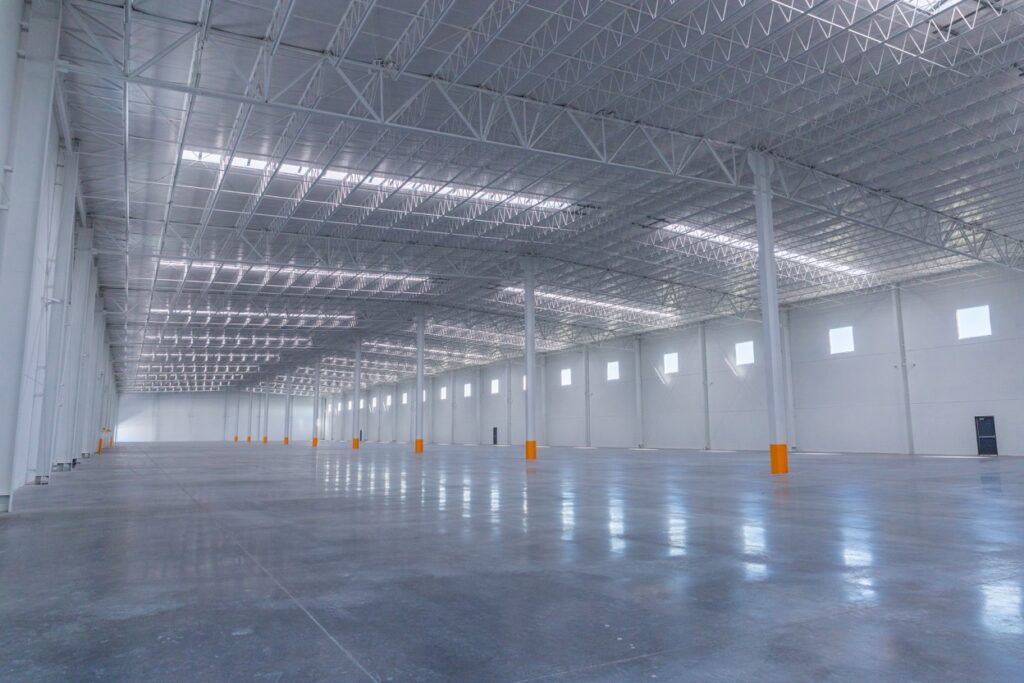
long spans allow for interior spaces without intermediate columns, facilitating operations and layout flexibility
this is especially important in logistics centers, production plants, and large-scale warehouses
• greater freedom in internal layout
• optimization of workflows
• ease of space reconfiguration
well-designed industrial buildings must consider the possibility of growth from the start.
this implies planning for expansion areas, access points, and a structure that allows for additions without affecting existing operations.
• growth without operational interruptions
• cost reduction in future expansions
• better long-term planning
automation is a growing trend in the industry, so buildings must be designed to integrate technologies such as automated storage systems, conveyor belts, or robotics.
this requires considering aspects such as electrical loads, heights, distribution, and technical spaces from the start.
• increased operational efficiency
• reduction of human errors
• optimization of production and logistics times
maintenance is a key factor in the life cycle of an industrial building.
a proper design facilitates access to installations, reduces intervention times, and prevents operational failures.
• easy access to critical facilities
• reduction of maintenance costs
• less downtime

• optimization of available space
it allows for making the most of every square and cubic meter of the building.
• increased operational productivity
well-designed spaces improve workflows.
• long-term cost reduction
future structural modifications are avoided.
• adaptation to market changes
the building can adjust to new operational needs.
• increase in the property's useful life
an efficient design reduces wear and tear and facilitates maintenance.
• limitations for expanding the building
• operational interruptions during modifications
• high costs in renovations
• inefficient or poorly used spaces
• incompatibility with new technologies
• difficulties in implementing automation
there is no single design that works for all industrial projects. the best solution is the one that adapts to the specific needs of the operation, considering both the present and future of the business.
however, an approach based on efficiency and scalability allows for the development of industrial buildings capable of growing, adapting, and integrating new technologies without compromising their operation.
this translates into a more solid investment, with lower risks and a higher long-term return.
at bilden, industrial building design is developed under a strategic approach that combines operational efficiency, flexibility, and a vision for the future.
from the planning stage, client needs and growth projections are analyzed to design spaces that can evolve without requiring complex structural modifications.
this approach allows:
• designing buildings adaptable to different uses
• facilitating the integration of automation
• optimizing operation and maintenance costs
• guaranteeing project scalability
by integrating these trends from the start, modern and efficient industrial buildings are developed, prepared to face the current and future challenges of the sector.
an efficient industrial building optimizes space use, facilitates operational processes, and allows for technology integration, reducing costs and improving productivity.
clear height allows for the use of vertical space, increases storage capacity, and facilitates the implementation of automated systems.
long spans are structural spaces without intermediate columns, which allows for greater flexibility in the layout and operation within the building.
aspects such as layout, electrical capacity, height, access, and spaces for integrating automated systems must be considered from the design stage.
contact us